What Is a Blue Spot on a Newborn Baby, and Will It Fade Away?
What Is a Blue Spot on a Newborn Baby, and Will It Fade Away?
Many parents notice that their newborn has a blue, gray, or greenish patch on the buttocks, lower back, or hips shortly after birth. This often causes concern, as it may look like a bruise or a sign of injury.
In reality, a blue spot on a newborn baby is a very common condition and is usually harmless. This article will help parents understand what a blue spot is, why it occurs, and whether there is anything to worry about—so you can feel reassured and confident in caring for your baby.
What Is a Blue Spot on a Newborn Baby?
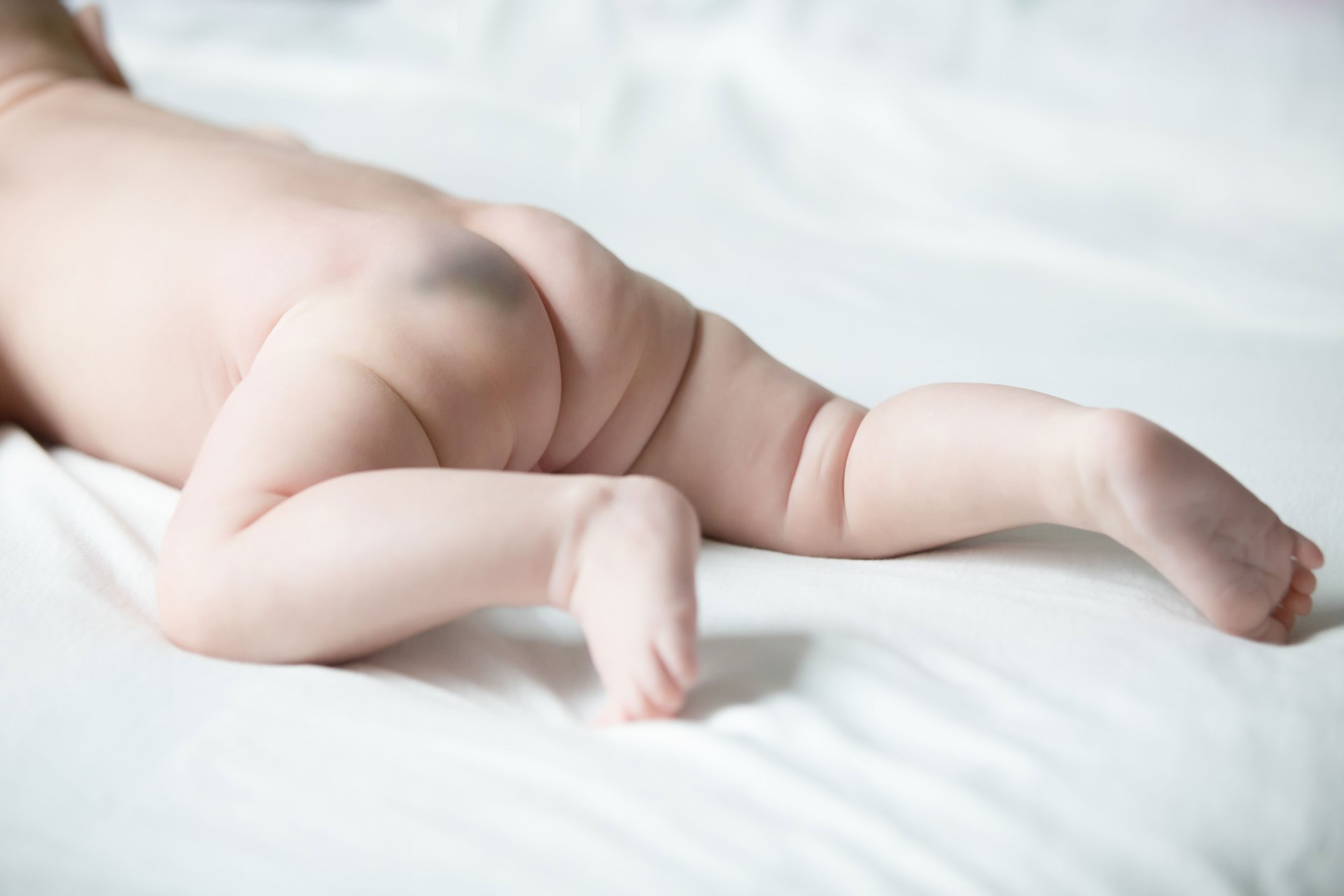
A blue spot on a newborn baby appears as a flat blue, gray, or blue-green patch that is present at birth or becomes noticeable within the first few days of life. It is most commonly found on the buttocks, lower back, hips, and sometimes the thighs.
This condition is a type of birthmark, often referred to as a Mongolian spot. It is not a bruise, not a wound, and does not cause pain, tenderness, or skin irritation for the baby.
Because the color may resemble bruising at first glance, parents may feel worried. However, unlike a bruise, a Mongolian spot usually has a smooth, well-defined area, does not change color over time, and is not painful when touched.
What Causes a Blue Spot on a Baby?
A blue spot on a newborn is caused by melanin (skin pigment) cells that are located deep within the skin during fetal development. This is part of a normal process while the baby is still in the womb.
It is not caused by injury, injections, handling, birth trauma, or improper care by parents. It is also not related to difficult labor or delivery complications.
As the baby grows, these pigment cells gradually disperse and become less visible, which is why the blue spot usually fades over time.

Is a Blue Spot on a Baby Dangerous?
In most cases, a blue spot on a newborn baby is not dangerous. It does not cause pain, itching, or discomfort, and it does not affect the baby’s health or development in any way.
Medical evidence strongly supports this reassurance.
- A national study conducted by the Faculty of Medicine, Ramathibodi Hospital, published in the Journal of the Medical Association of Thailand (JMAT), found that nearly 100% of Thai newborns have this type of birthmark, making it extremely common among Asian populations.
- Internationally, both the American Academy of Pediatrics (AAP) and Mayo Clinic confirm that Mongolian spots are not bruises. They occur because pigment cells do not reach the upper layers of the skin in time during fetal development. When light passes through the skin, it creates a blue or bluish-gray appearance—a phenomenon known in medicine as the Tyndall effect.
How Should Parents Care for a Baby with a Blue Spot?
A blue spot on a baby does not require any special care. Parents can care for their baby as usual:
- Bathe and cleanse the skin normally
- No need to apply medication or special creams
- Do not massage or scrub the area in an attempt to remove the spot
When Should You Take a Baby with a Blue Spot to See a Doctor?
Although blue spots are generally harmless, parents should consult a doctor if:
- The spot grows rapidly in size
- The color changes unusually
- There is swelling, redness, pain, or a rash
- Parents feel unsure or uncomfortable about the appearance
Conclusion
A blue spot on a newborn baby, also known as a Mongolian spot, is a very common skin condition—especially among Asian infants. It is not a bruise, not caused by injury, and does not affect the baby’s health or development. These spots usually fade gradually as the child grows and do not require treatment. Parents can feel reassured and continue caring for their baby with confidence and peace of mind.