What Are Newborn Stem Cells? Why Many Families Choose to Store Them at Birth

In recent years, newborn stem cells have gained increasing attention among parents who are planning long-term health options for their children. Many parents may have heard that stem cells can only be collected at birth—and that once the moment is missed, it cannot be recovered.
This article by AVIOLA provides a step-by-step explanation of newborn stem cells, from what they are and why they must be collected at birth, to their potential benefits and storage duration—helping parents make informed and confident decisions.

What Are Newborn Stem Cells?
Newborn stem cells are stem cells collected from the umbilical cord and placenta immediately after birth. They are considered highly valuable because they are extremely young and have not been affected by aging, disease, or environmental factors.
To explain simply, stem cells can be compared to “starter cells.” They have not yet been assigned a specific function. When tissues or organs become damaged or degenerate, the body can use these starter cells to support natural repair and regeneration processes.

Why Must Stem Cells Be Collected “At Birth” Only?
After delivery, the umbilical cord and placenta are typically discarded as medical waste. If stem cells are not collected at that moment, they cannot be retrieved later.
This is why many parents decide to store newborn stem cells, for several important reasons:
1. High Youthfulness and Purity
Stem cells from the umbilical cord and placenta are newly formed cells. They have not undergone deterioration from age, stress, environmental exposure, or illness, making them highly potent and capable of cell division and differentiation.
2. Greater Potential for Future Medical Use
Due to their quality and youth, newborn stem cells are widely studied and used in medical research related to blood disorders, immune conditions, and regenerative medicine—supporting future medical advancements.
3. Long-Term Health Planning for Your Child
Storing newborn stem cells does not mean immediate treatment. It is a proactive step—preserving a medical resource that may expand healthcare options for your child in the future.
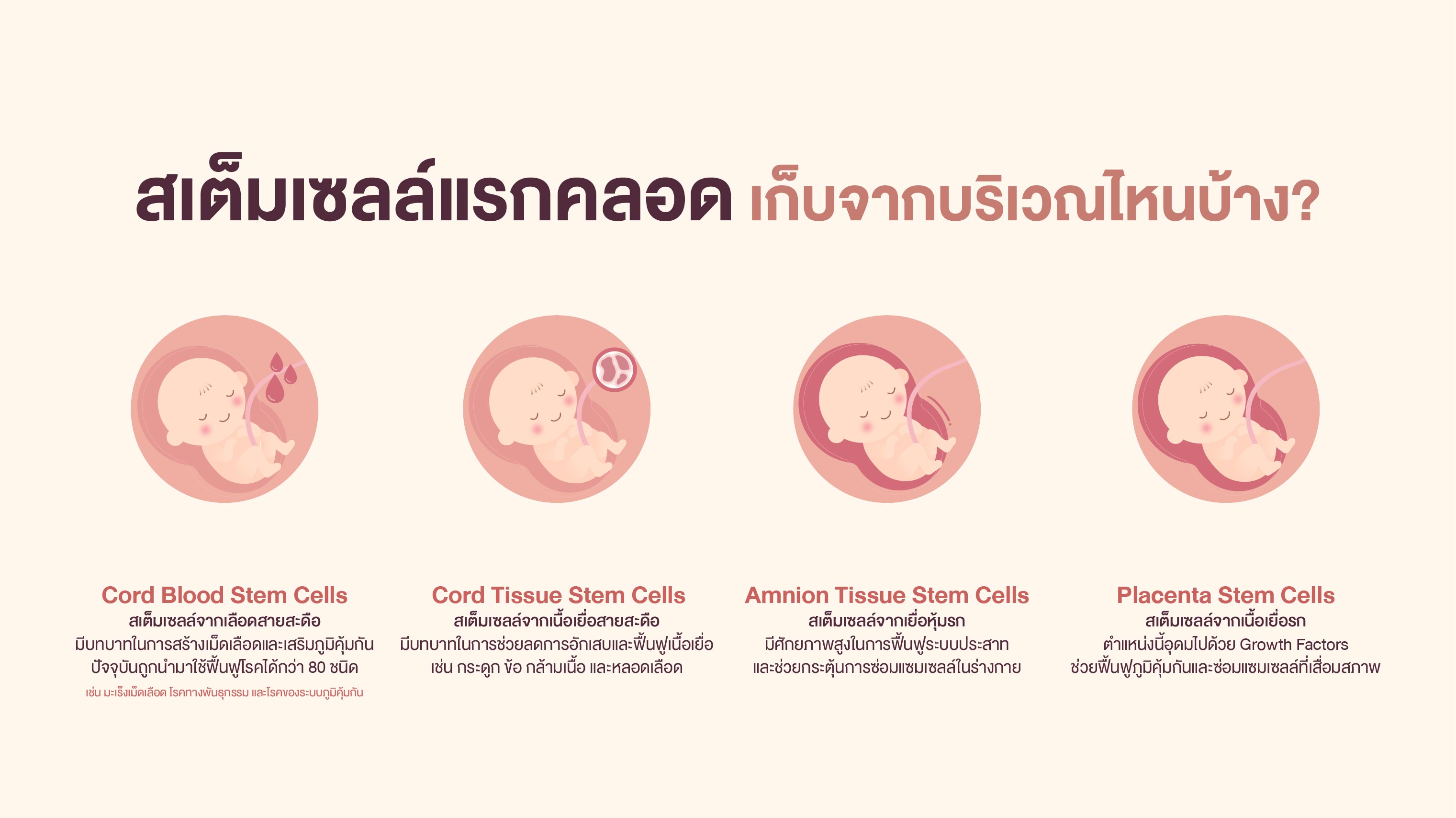
Where Can Newborn Stem Cells Be Collected From?
Newborn stem cells can be collected from multiple areas related to the umbilical cord and placenta—each offering unique health potential. AVIOLA will guide you through each source below.
Cord Blood
Cord blood is rich in Hematopoietic Stem Cells (HSCs), which are used to treat more than 80 blood-related and genetic diseases, including:
- Leukemia and lymphoma
- Bone marrow disorders (e.g., aplastic anemia, myelodysplastic syndromes)
- Congenital immune deficiencies
- Red blood cell disorders (e.g., thalassemia, sickle cell disease)
- Metabolic disorders such as diabetes and fatty liver disease
Cord Tissue
Cord tissue contains Mesenchymal Stem Cells (MSCs)—a highly versatile type of stem cell capable of supporting tissue repair and regeneration in bones, cartilage, muscles, blood vessels, and skin.
- Alzheimer’s disease
- Parkinson’s disease
- Muscular dystrophy
- Cardiac arrhythmias
- Diabetes
- Liver cirrhosis
- Osteoarthritis and joint degeneration
- Rheumatoid arthritis
- Psoriasis
- Macular degeneration
- Autism spectrum disorder
- Central nervous system degeneration
Amnion Tissue Stem Cells
Amnion tissue is another rich source of MSCs, known for high purity and rapid tissue-regeneration potential. These cells are widely studied for their role in supporting the nervous system, reducing inflammation, and promoting cellular repair.
Research areas include:
- Alzheimer’s disease
- Parkinson’s disease
- Rheumatoid arthritis
- Psoriasis
- Autism spectrum disorder
- Neurological disorders
- Stroke
- Cerebral palsy
- Paralysis
Placenta Stem Cells
The placenta is a unique organ formed during pregnancy that supplies oxygen and nutrients to the fetus—often referred to as the “origin of life.” It is rich in bioactive substances such as enzymes, peptides, amino acids, vitamins, and growth factors.
Placental tissue also contains MSCs, which have strong potential in tissue regeneration, inflammation reduction, and cellular renewal.
- Ongoing research explores placental MSCs in conditions such as:
- Alzheimer’s disease
- Parkinson’s disease
- Muscle degeneration
- Heart rhythm disorders
- Diabetes
- Liver cirrhosis
- Degenerative joint diseases
- Autoimmune disorders
- Psoriasis
- Retinal degeneration
- Autism spectrum disorder
Additionally, studies suggest placental stem cells may support skin health by promoting natural collagen and elastin production—helping maintain skin elasticity, balance, and resilience.

When Can Newborn Stem Cells Be Used?
Newborn stem cells do not need to be used immediately. They are stored in liquid nitrogen tanks at −196°C, preserving their quality over time.
They may be considered for use when:
- Recovery is needed after major surgery
- Degenerative conditions arise and progression needs to be slowed
- A physician determines stem cell therapy is appropriate
- Stem cells are used as supportive therapy alongside standard treatment

How Long Can Newborn Stem Cells Be Stored?
One of the most common questions parents ask is how long stored stem cells remain usable.
With AVIOLA, newborn stem cells can be stored for up to 60 years, covering childhood, adulthood, and later life. Storage is maintained under strict cryopreservation standards with continuous quality monitoring.
Long-term stem cell storage is not just about preserving cells—it is about preserving future health possibilities.
Conclusion
Newborn stem cells are a meaningful gift parents can give their child from the very first day of life. These young, high-quality stem cells can only be collected once and cannot be replaced. Choosing to store them is not a decision for today alone, but a thoughtful investment in your child’s future health—rooted in care, foresight, and love.