What Are Stem Cells? Why They Matter for Your Future Health

What Are Stem Cells? Why They Matter for Your Future Health
When it comes to stem cells, many people imagine complex medical technology or something far out of reach. But the truth is, stem cells exist in our bodies from birth. Today, science has proven that properly caring for and preserving high-quality stem cells early on is one of the smartest health investments you can make for your future.
What Are Stem Cells? Understanding the Building Blocks of Life
Stem cells are special cells with two remarkable abilities:
- Self-renewal — They can divide and create copies of themselves indefinitely throughout life
- Differentiation — They can transform into various specialized cell types like muscle cells, nerve cells, blood cells, and more
Think of them as "raw materials for your body" — ready to become whatever component your body needs. This makes stem cells the key to natural repair and regeneration processes.
Types of Stem Cells You Should Know
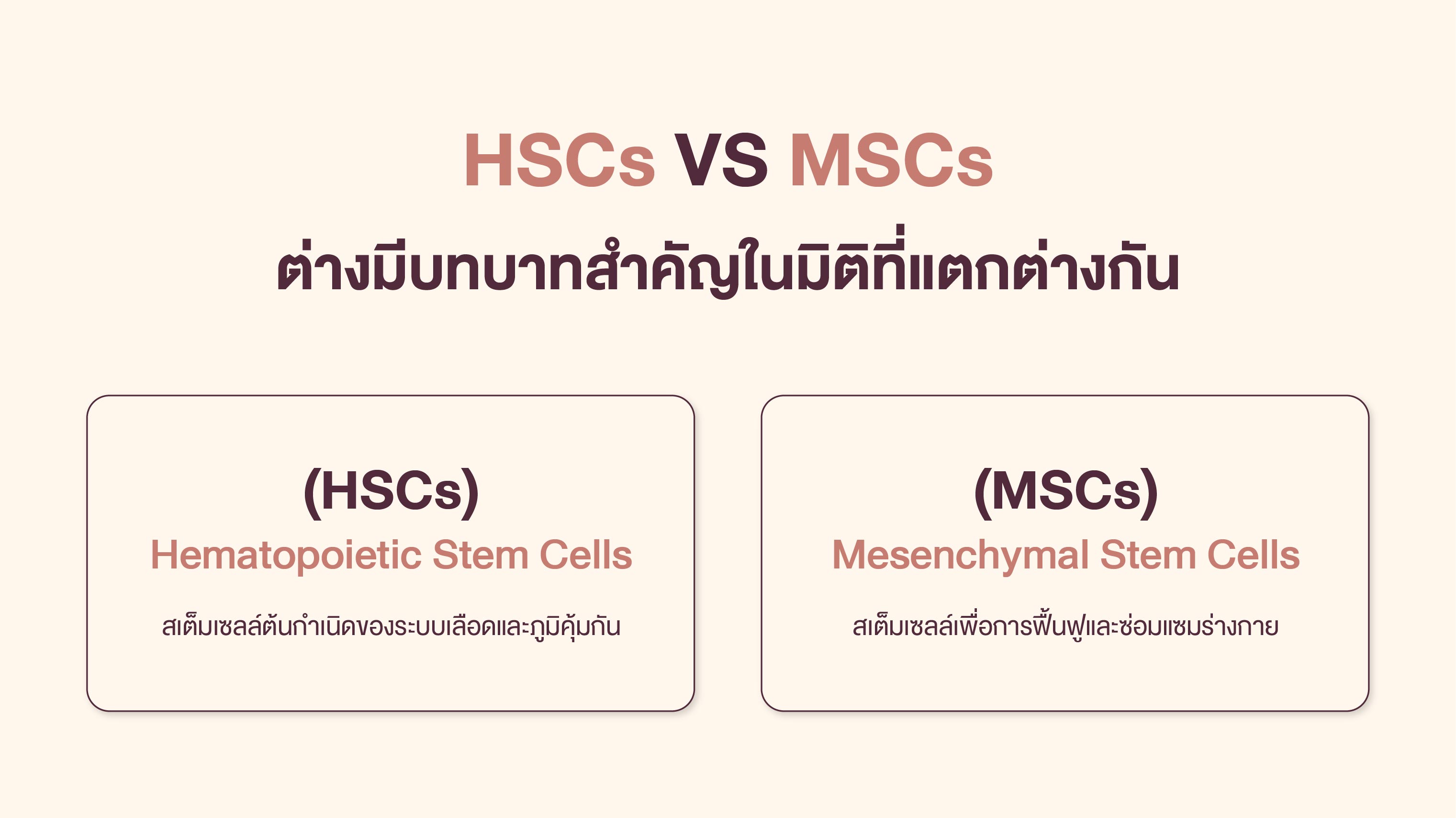
Stem cells are classified into two main groups based on their function and source:
1. Hematopoietic Stem Cells (HSCs)
Source: Cord Blood Stem Cells — can only be collected at birth
Role: Generate all types of blood cells (red blood cells, white blood cells, platelets) and immune cells. Used to treat over 80 blood and immune system disorders including leukemia, thalassemia, anemia, and immune deficiencies. Medically approved worldwide for over 30 years.
2. Mesenchymal Stem Cells (MSCs)
Sources: Cord Tissue MSCs, Placenta MSCs, Amnion MSCs, Adipose-Derived MSCs (AD-MSCs), Dental Pulp MSCs (baby teeth or wisdom teeth), Peripheral Blood MSCs
Role: Repair and regenerate damaged tissues including bone, cartilage, muscle, tendons, and skin. Possess anti-inflammatory properties, immune system modulation (immunomodulation), and ability to stimulate new cell growth. Currently attracting significant research interest in regenerative medicine, arthritis treatment, heart disease, diabetes, and anti-aging therapies.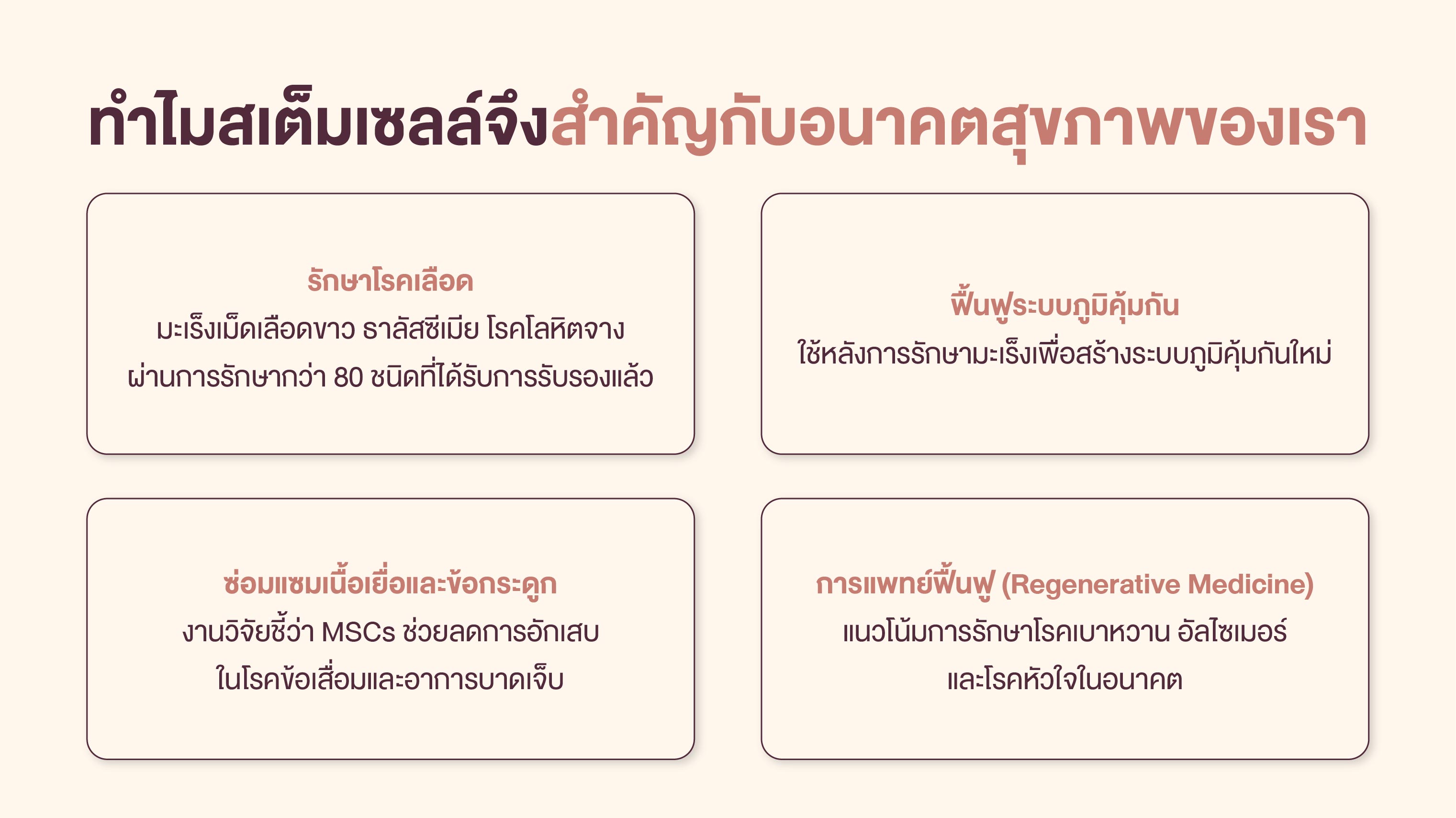
Why Stem Cells Matter for Your Future Health
Every day, your body loses millions of cells through normal wear and tear. Aging, pollution, stress, and disease all accelerate cellular degradation. Young, healthy stem cells are like an "emergency reserve" ready to repair your body whenever needed.
Proven medical benefits include:
- Blood disorder treatment: Leukemia, thalassemia, anemia — over 80 FDA-approved treatments
- Immune system restoration: Post-cancer treatment to rebuild immune function
- Tissue and joint repair: Research shows MSCs reduce inflammation in arthritis and injuries
- Regenerative medicine: Promising future treatments for diabetes, Alzheimer's, and heart disease

Why Bank Stem Cells "Today"?
The answer is simple: stem cells are most "youthful" and "potent" when you're young. As you age, stem cells naturally decline in number and effectiveness. Banking them at birth or while young is like "freezing time" — preserving your highest-quality cells for future use.
Think of it like saving money for emergencies. The earlier you start, the better quality reserve you'll have when the unexpected happens. Having stem cells banked is preparing your body to handle whatever health challenges the future may bring.
What's Involved in Banking Stem Cells?
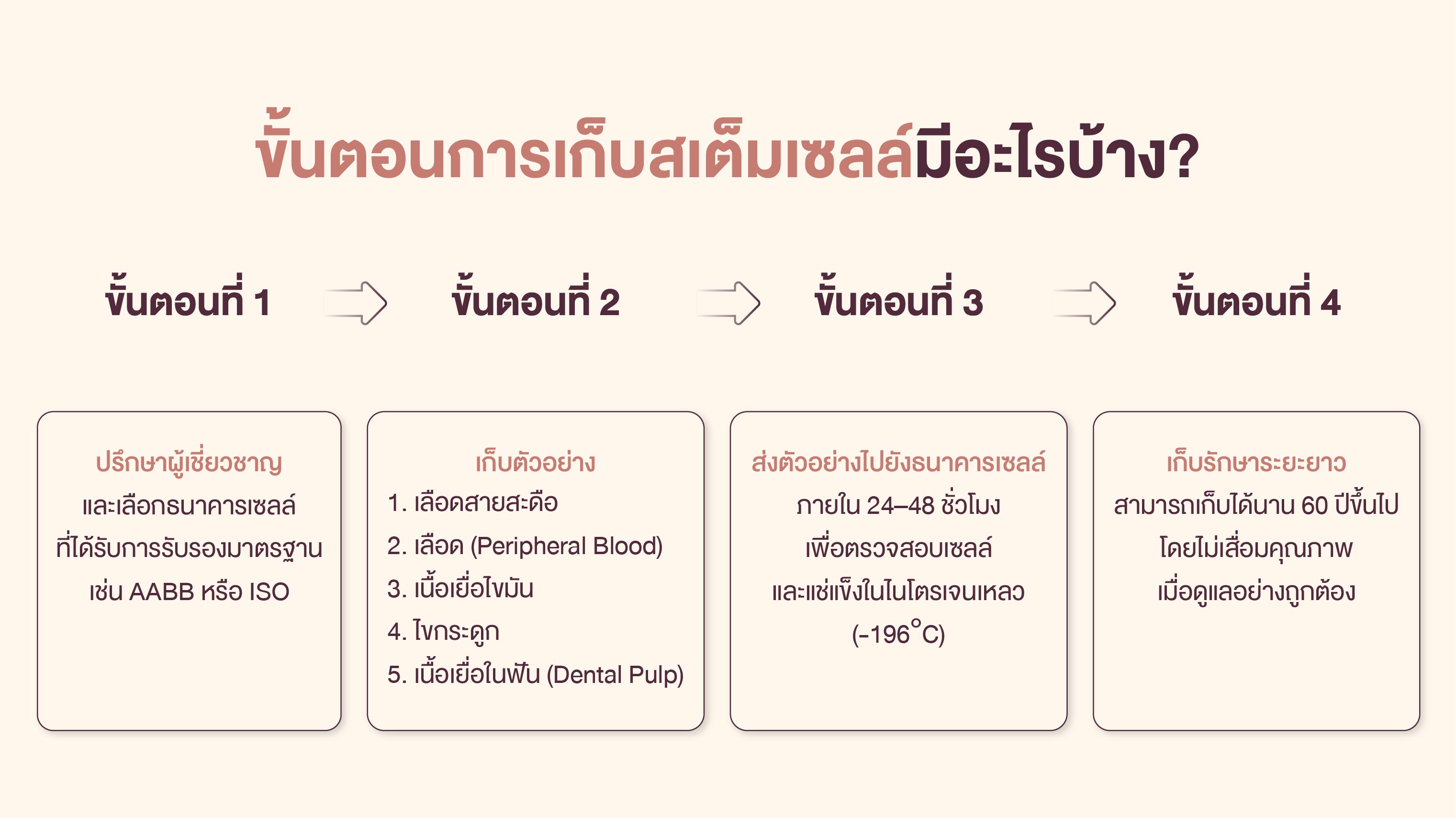
Modern stem cell banking is straightforward and safe. The typical process includes:
Step 1: Consult with specialists and choose an accredited stem cell bank (AABB, ISO certified)
Step 2: Collection — Multiple sources available depending on age:
(1) Cord blood collected immediately after birth by medical staff, 100% safe for mother and baby
(2) Peripheral blood collected like a standard health check blood draw, convenient for adults
(3) Adipose tissue collected via mini-liposuction, yields high MSC quantities for regenerative medicine
(4) Bone marrow collected by specialists, ideal for direct blood disorder treatment
(5) Dental pulp from baby teeth or extracted wisdom teeth, high-quality stem cells without surgery, suitable for children and adults with tooth extraction
Step 3: Transport samples to the bank within 24–48 hours for processing and cryopreservation in liquid nitrogen (-196°C)
Step 4: Long-term storage — Can be preserved for 25+ years without quality degradation when properly maintained

Frequently Asked Questions (FAQ) About Stem Cells
Q: Where can stem cells be collected from?
A: Stem cells can be collected from cord blood, cord tissue (Wharton's Jelly), placenta, bone marrow, adipose tissue, and dental pulp. Each source provides different types of stem cells with unique properties.
Q: Can I still bank stem cells if I didn't collect at birth?
A: Yes! Even if you didn't bank at birth, you can still collect stem cells from bone marrow, adipose tissue, or dental pulp later in life. However, cell quality is optimal when collected at a younger age.
Q: How much does stem cell banking cost?
A: Costs vary by bank and package chosen. Typically includes initial processing fees and annual storage fees. Compare banks and choose one with international accreditation.
Q: Can stem cells be used for other family members?
A: It depends on the stem cell type. Cord blood stem cells can be used for siblings or family members with compatible genetics (HLA Match), making them valuable for the whole family. However, stem cells from other sources like adipose tissue, bone marrow, or dental pulp work best for the donor themselves, as there's no risk of rejection.
Future Health Starts with Planning Today
Stem cells are no longer a distant concept — they represent proactive health planning that forward-thinking people worldwide are embracing. Cell degradation happens every day, but you can prepare in advance by banking high-quality stem cells now.
Because the best investment is in the health of yourself and those you love. Don't wait until your body needs them to start looking.

Contact AVIOLA at:
Tel: 064-629-8791
Line: @aviola
Email: info@aviolabiobank.com