ไขข้อสงสัย เก็บสเต็มเซลล์ลูกดีไหม? คู่มือ Stem Cell Banking สำหรับพ่อแม่ยุคใหม่

Should You Store Your Baby’s Stem Cells?
What Modern Parents Should Know About Stem Cell Banking and Your Child’s Future Health
For many modern parents, planning for their child’s future goes beyond education and postnatal care — it also includes long-term health planning.
One question that more families are asking today is:
“Should I store my baby’s stem cells?”
Because the moments immediately after birth are a once-in-a-lifetime opportunity to collect high-quality newborn stem cells.
In this article, AVIOLA Biobank will guide you through everything parents should know about:
- What stem cells are
- What Cord Blood and Cord Tissue are
- Where newborn stem cells can be collected from
- The benefits of stem cell banking
- What Stem Cell Banking means
- And why many families choose to preserve their baby’s stem cells from birth
What Are Stem Cells?
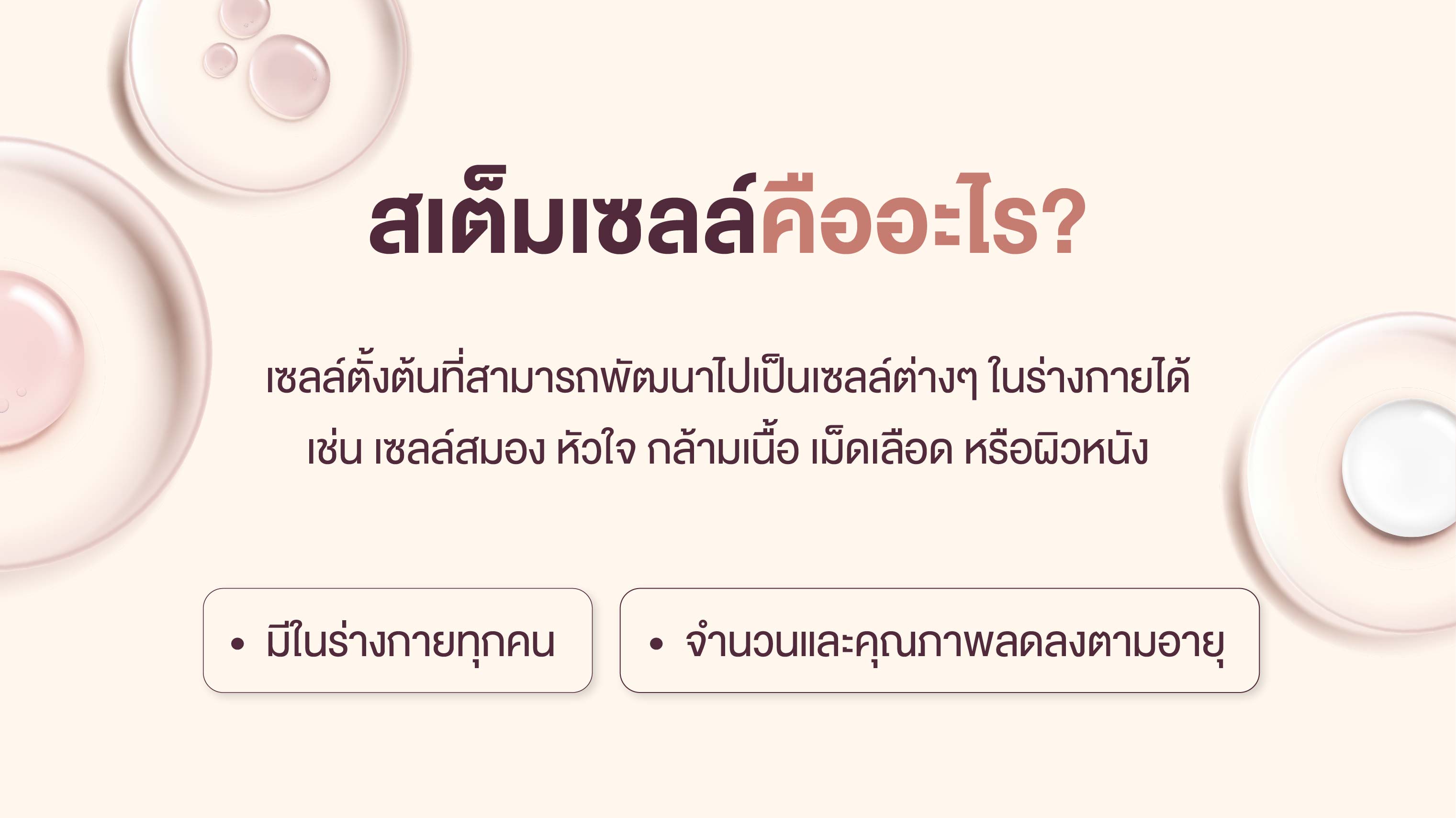
Stem cells are special cells in the body that serve as the foundation for many different types of cells. They play an important role in growth, repair, and regeneration within the body.
Stem cells have two unique abilities that make them different from ordinary cells:
1. Self-Renewal
Stem cells can continuously divide and create new cells to replace damaged or aging cells.
This allows the body to naturally repair itself through processes such as:
- Blood cell production
- Skin regeneration
- Tissue repair after injury
2. Differentiation
Stem cells can develop into specialized cells, including:
- Blood cells
- Muscle cells
- Bone cells
- Nerve cells
- Skin cells
Because of these abilities, stem cells have become a major focus in Regenerative Medicine, Anti-aging Medicine, Longevity, and Personalized Medicine.
Simply put, stem cells can be thought of as:
“The body’s natural repair and regeneration system.
Where Can Newborn Stem Cells Be Collected From?
Newborn stem cells can be collected from four major sources at birth: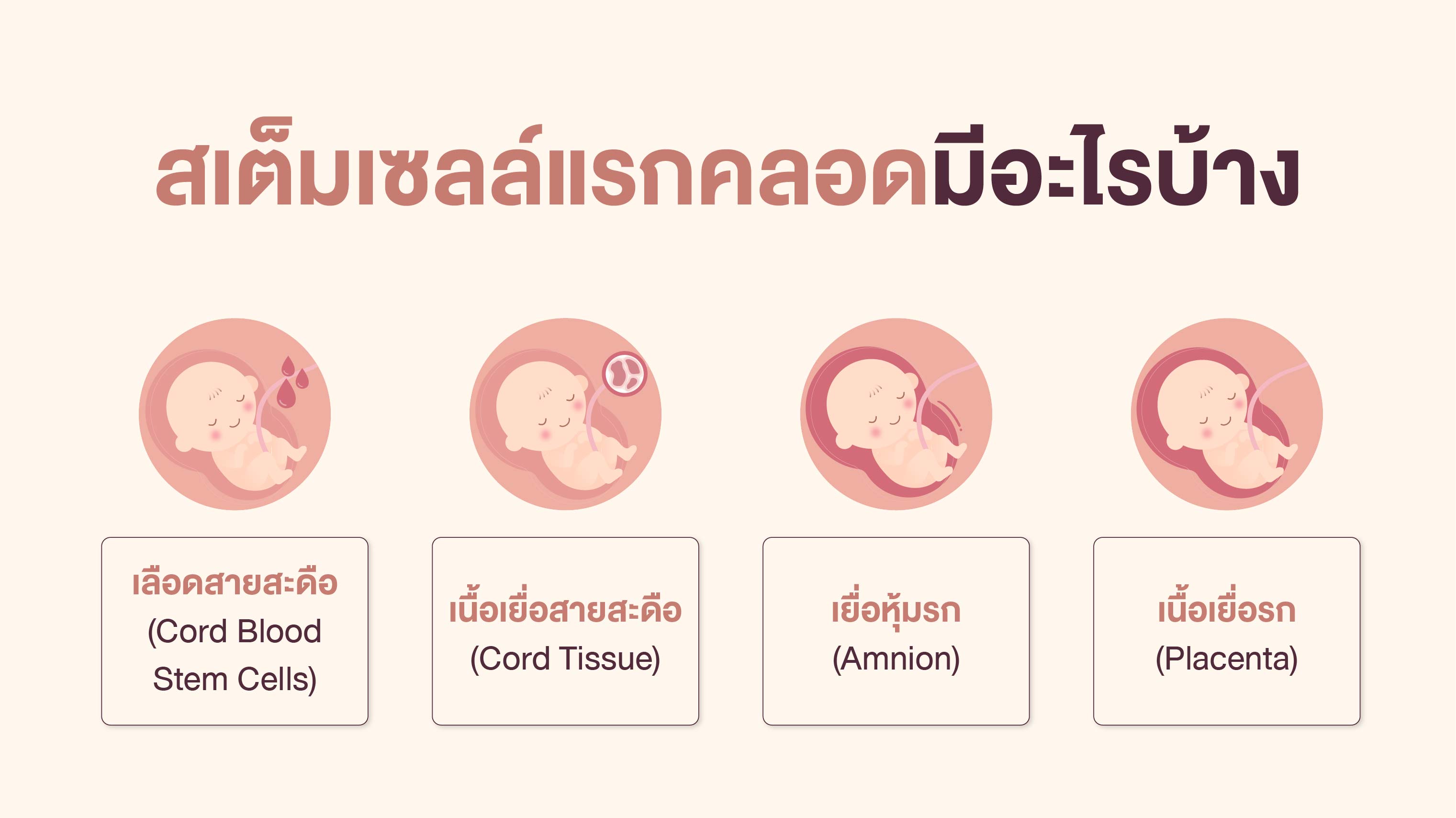
1. Cord Blood
Cord Blood is a rich source of Hematopoietic Stem Cells (HSCs), which are responsible for forming blood and immune system cells.
Cord Blood stem cells have been medically used in hematopoietic stem cell transplantation for more than 80 diseases related to blood disorders and immune deficiencies.
Examples include:
- Leukemia
- Lymphoma
- Thalassemia
- Bone marrow failure syndromes
- Certain inherited immune disorders
2. Cord Tissue
Cord Tissue contains Mesenchymal Stem Cells (MSCs), which are associated with:
- Tissue repair
- Immune modulation
- Anti-inflammatory processes
- Regenerative medicine
MSCs are currently being studied in areas such as:
- Alzheimer’s disease
- Parkinson’s disease
- Diabetes
- Osteoarthritis
- Liver disease
- Neurological disorders
3. Amnion
The Amnion (amniotic membrane) is another source of highly potent MSCs with strong regenerative potential.
It has attracted interest in areas involving:
- Brain and nervous system regeneration
- Anti-inflammatory therapy
- Tissue healing
Research is ongoing in conditions such as:
- Stroke
- Cerebral palsy
- Neurodegenerative diseases
- Paralysis
4. Placenta
The Placenta is often referred to as “The origin of life.”
It contains:
- Mesenchymal Stem Cells (MSCs)
- Growth Factors
- Peptides
- Amino acids
- Bioactive proteins
Placental tissue is widely studied in:
- Regenerative medicine
- Wellness & Longevity
- Anti-aging medicine
- Skin regeneration
- It has also gained interest for supporting postpartum recovery and skin health.
Benefits of Storing Your Baby’s Stem Cells
Today, newborn stem cell banking is no longer viewed as simply “storing cells.”
Instead, it is increasingly considered a form of long-term health planning for the future.
Because the moments immediately after birth are a once-in-a-lifetime opportunity to preserve young stem cells and valuable biological resources from your baby.
Newborn stem cells are unique because they have not yet been exposed to aging, environmental pollution, chronic inflammation, or long-term stress like adult cells.
This is why they have gained significant attention in the fields of Stem Cell Banking, Regenerative Medicine, and Future Health Technology.
1. Preserving Future Health Options
One of the main reasons many families choose to store their baby’s stem cells is not because they expect illness in the future, but because:
“The future is unpredictable.”
Stem cell banking can be viewed as preserving future healthcare options from the very first day of life, potentially increasing access to advanced medical technologies and regenerative medicine in the future.
Especially as modern medicine continues moving toward Personalized Medicine and Regenerative Medicine.
2. Preserving the Youngest and Most Potent Cells
Newborn stem cells are considered highly youthful and biologically active compared to adult stem cells, which may have already been affected by:
- Aging
- Environmental toxins
- Stress
- Chronic inflammation
- Various health-related factors
This is one reason why newborn stem cells are highly valued for long-term Stem Cell Banking.
3. Supporting Blood and Immune System Therapies
Hematopoietic Stem Cells (HSCs) from Cord Blood play an important role in blood and immune system function.
Today, HSCs have been medically used in more than 80 diseases related to blood disorders and immune deficiencies, including:
- Leukemia
- Thalassemia
- Bone marrow disorders
- Certain inherited immune deficiency diseases
This has made Cord Blood Banking one of the major reasons many families are interested in storing newborn stem cells.
4. Supporting Regenerative Medicine
Mesenchymal Stem Cells (MSCs) from Cord Tissue, Placenta, and Amnion have attracted significant attention for their regenerative and tissue-repair potential.
These cells are being studied in areas involving:
- Nervous system regeneration
- Bone and joint repair
- Muscle recovery
- Skin regeneration
- Blood vessels
- Immune system modulation
Ongoing medical research is exploring MSC applications in conditions such as:
- Alzheimer’s disease
- Parkinson’s disease
- Osteoarthritis
- Diabetes
- Neurological disorders
- Chronic inflammatory diseases
However, many applications are still under clinical investigation and require further medical evaluation.
5. A One-Time Opportunity That Cannot Be Recreated
Perhaps the most important aspect of stem cell banking is this:
“You only get one chance.”
After birth, Cord Blood, Cord Tissue, Amnion, and Placenta cannot be collected again.
For many families, even if the stem cells may never be needed, preserving them today may hold far greater value in the future than losing the opportunity forever.
6. Long-Term Peace of Mind for Parents
For many families, stem cell banking is not only about medical technology — it is also about peace of mind.
The feeling that, as their child grows up, they have already chosen to preserve one of the most valuable biological resources from the very beginning of life.
No one can predict whether these stem cells will ever be needed.
But for many parents, having a future option is better than having no option at all.
What Is Stem Cell Banking?

Stem Cell Banking is the process of preserving stem cells under ultra-low temperatures through Cryopreservation technology in order to maintain the quality and biological potential of the cells over the long term.
Stem cells are stored in liquid nitrogen tanks at approximately -196°C, an ultra-low temperature that helps slow down biological activity and preserve the cells in a condition as close as possible to the day they were collected.
However, high-quality Stem Cell Banking involves much more than simply “freezing cells.”
It also depends on:
- Laboratory standards
- Cryopreservation technology
- Quality control systems
- The expertise of stem cell specialists
- And advanced cell culture and expansion processes to help ensure the highest possible cell quality when needed in the future
Should You Store Your Baby’s Stem Cells?
For many families, stem cell banking is considered a form of long-term health planning.
Not because parents expect their child to become ill in the future, but because they want to preserve future health options and possibilities from the very first day of life.
The newborn period is a once-in-a-lifetime opportunity to collect high-quality stem cells from your baby — an opportunity that cannot be recreated later.
How Long Can Stem Cells Be Stored?
When preserved under appropriate standards and controlled conditions, stem cells can be stored long term.
This requires:
- Advanced Cryopreservation systems
- Continuous temperature monitoring
- Standardized laboratory facilities
- Ongoing cell quality monitoring
For many families, stem cell banking represents preserving future healthcare opportunities for their child.
Conclusion
So, should you store your baby’s stem cells?
For many families, stem cell banking has become an increasingly important option for long-term health planning.
Newborn stem cells are highly youthful and biologically active cells that can only be collected once — immediately after birth.
However, one of the most important considerations in stem cell banking is not simply “having cells stored,” but ensuring the quality of those cells when they may one day be needed in the future.
This includes:
- Cell quality and integrity
- Cell viability after preservation
- Laboratory standards
- Cryopreservation systems
- Cell quality testing
- And the expertise of the scientific team responsible for stem cell processing and expansion
Because stem cells are living cells, they require highly controlled environments, advanced technology, and expert care throughout the entire storage process.
At AVIOLA Biobank, we believe that high-quality Stem Cell Banking is not simply about preserving cells — it is about caring for every cell with scientific precision, advanced technology, and a dedicated team of Stem Cell Scientists specializing in stem cell biology and cell culture.
Our goal is to help maintain the highest possible stem cell quality for the future.
Ultimately, there may not be one single answer for every family when deciding whether or not to store stem cells.
But for many parents, stem cell banking means preserving future health possibilities and peace of mind for their child from the very first day of life — creating more options for tomorrow, when they may matter most.