Expecting Your First Child? Here’s What Every Parent Should Know

Raising a child to grow up healthy and well-rounded takes more than love alone. It requires understanding, preparation, and care in many aspects of life. For many families, becoming a parent is one of the biggest and most challenging roles they will ever take on—because there is no universal manual and no single “right way” to raise a child.
In this article, AVIOLA summarizes five essential areas every first-time parent should understand when preparing to welcome their first child—so you can care for your baby with confidence, warmth, and clear direction from the very beginning.

According to pediatricians and global medical organizations, every child grows at their own pace. Healthy development is not about being the fastest—it’s about being appropriate for each stage of growth. Comparing children or rushing milestones can create unnecessary pressure.
- Development includes emotional, cognitive, and social growth—not just walking or talking
- Understanding age-appropriate milestones helps reduce parental anxiety
- Pushing or comparing children may negatively affect their confidence
2) Childhood Nutrition Is the Foundation of the Body and Brain
Nutrition during early childhood plays a critical role in brain development, immune health, and lifelong eating habits.
Three key principles parents should know:
1. What to eat: food quality and nutrients
2. How to eat: eating environment and behavior
3. How much to eat: balance without force-feeding
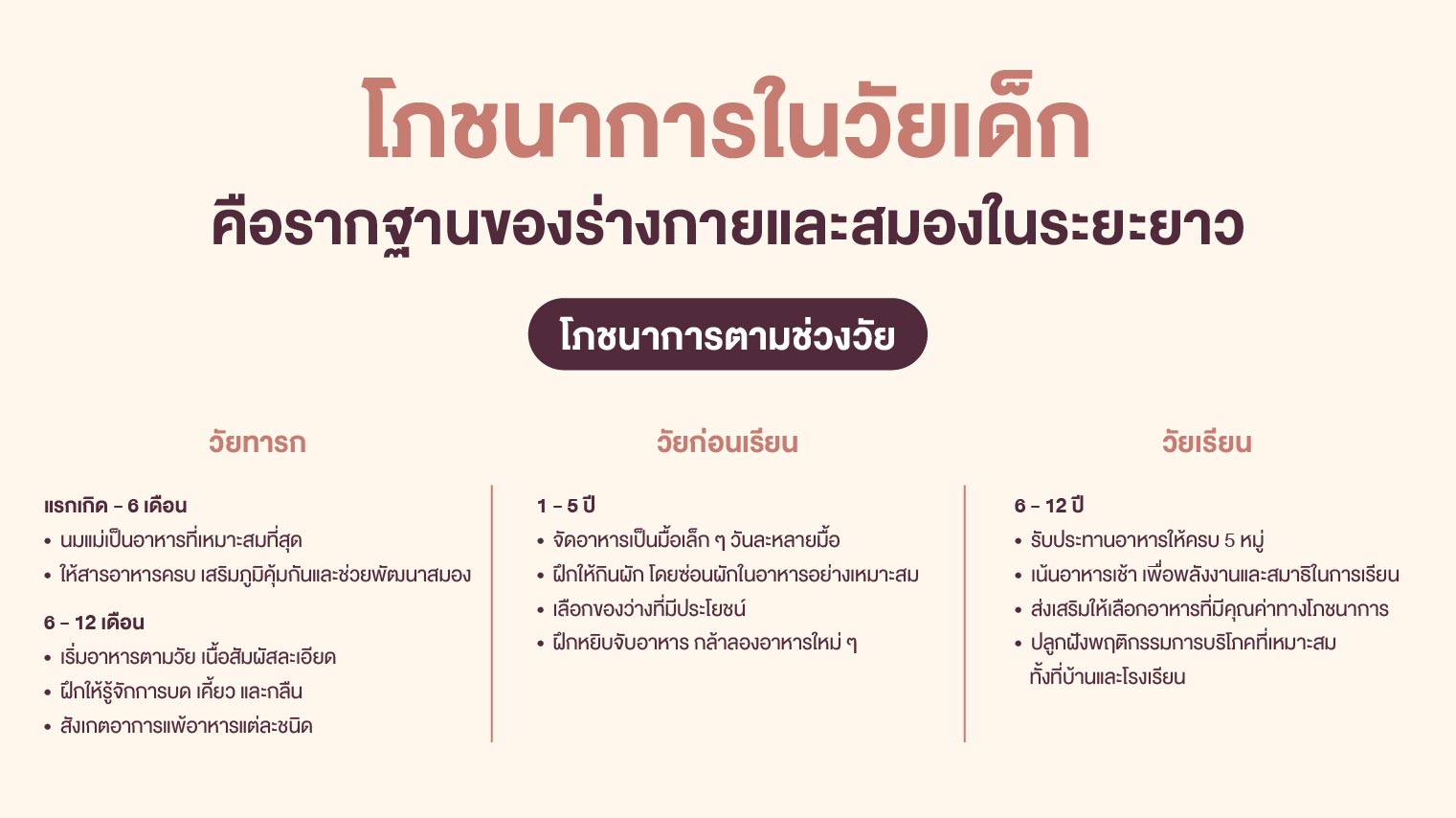
Nutrition by Age
Infancy
- New born – 6 months
- Breast milk is ideal, providing complete nutrition and immune support.
- 6 – 12 months
- Introduce age-appropriate solid foods with smooth textures. Encourage chewing and swallowing while monitoring for allergies.
Early Childhood
- 1 - 5 years
- Serve small meals frequently. Encourage vegetables, offer healthy snacks, and let children explore new foods.
School Age
- 6 - 12 years
- Balanced meals with all five food groups. Emphasize breakfast and healthy food choices at home and school.
Essential Nutrients
- Protein: tissue repair, muscles, immunity
- Iron: brain development and focus (especially 6–24 months)
- Calcium + Vitamin D: bones and teeth
- Healthy fats: brain and nervous system development
- Fiber + water: digestive health

3) Daily Care Builds a Child’s Sense of Safety
Caring for a child is not only about physical growth—it’s about emotional security and social readiness.
Children who experience consistent, warm, and responsive care learn that the world is safe and that adults can be trusted. This sense of safety forms the foundation of emotional and social development.
- Respond consistently to your child’s needs
- Care for both physical and emotional well-being
- Teach social skills such as sharing, waiting, and peaceful problem-solving
- Model good manners and respectful communication
- Help children understand and express emotions
Every daily routine—meals, playtime, bedtime—is an opportunity for parents and children to learn and grow together.

Children don’t learn only from words—they absorb tone of voice, behavior, and emotional atmosphere. Even before they can speak, children sense stress, calm, tension, and safety.
What Children Absorb from Parents
- Accumulated stress or anxiety
- Emotional responses such as yelling, withdrawal, or suppression
- How adults handle conflict and mistakes
This does not mean parents are “bad”—it means children learn from what they experience daily.
Parents Don’t Have to Be Perfect—Just Self-Aware
Feeling irritable, exhausted, guilty, or overwhelmed is not failure—it’s a sign that support may be needed.
Seeking Mental Health Support Is Normal
In modern families, consulting psychologists or psychiatrists is no longer unusual. It’s a proactive way to care for yourself—so you can care for your child sustainably.
5) Long-Term Health Planning for Your Child
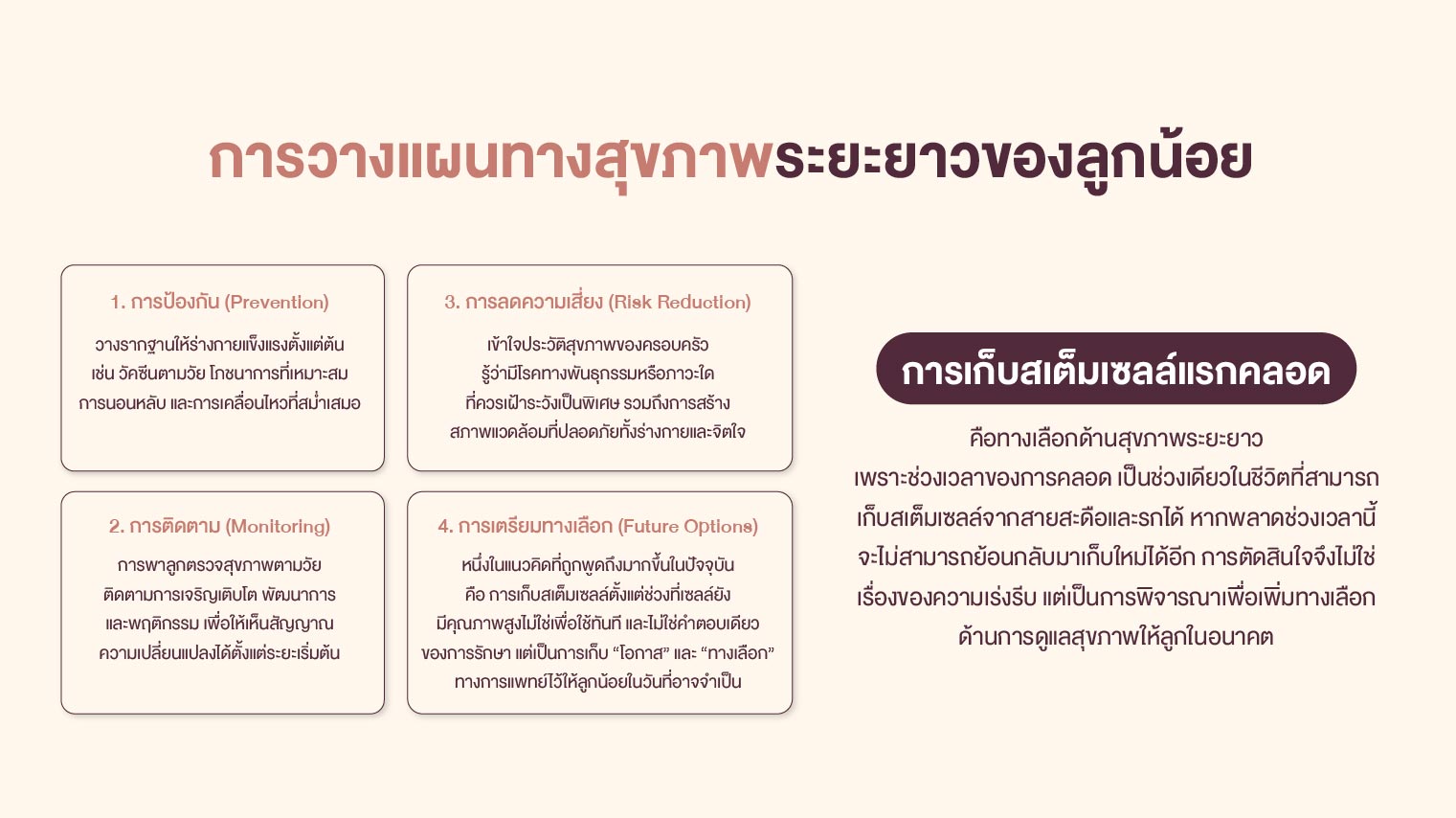
Long-term health planning can be viewed in four layers:
1. Prevention
Vaccinations, proper nutrition, sleep, and physical activity.
2. Monitoring
Regular health checkups and developmental tracking.
3. Risk Reduction
Understanding family medical history and creating a safe environment.
4. Future Options
Preparing medical resources that may be beneficial in the future.
Newborn Stem Cell Banking as a Long-Term Health Option
Newborn stem cell collection is a health-planning option—not a treatment or a guarantee. Birth is the only time stem cells from the umbilical cord and placenta can be collected. If this moment passes, the opportunity cannot be recovered.
Preparing in advance does not mean expecting illness—it means ensuring that if medical needs arise, families are not starting from zero.
Summary
What should parents know when expecting their first child?
Raising a child well requires more than physical care alone. Parents should understand child development, provide proper nutrition, create emotional safety, care for both the child’s and parents’ mental health, and plan for long-term well-being. When parents are informed and prepared, children grow up with confidence—within a family that is warm, supportive, and ready to care for them at every stage of life.